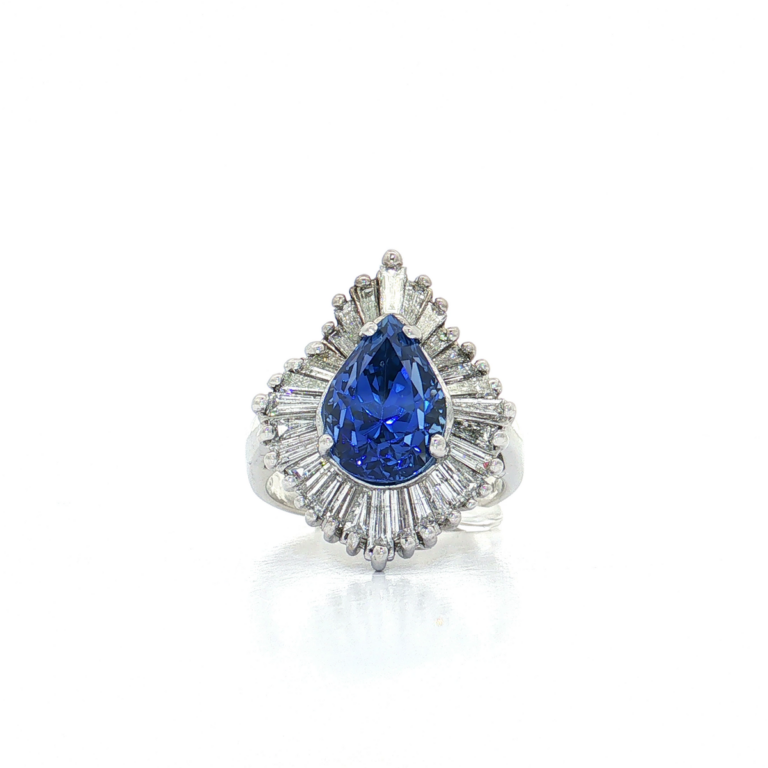
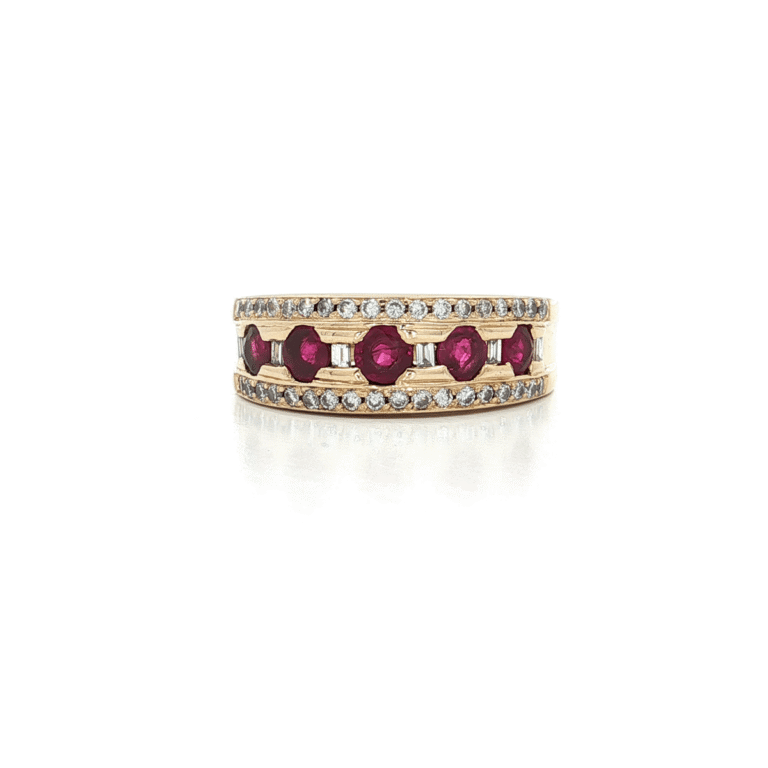
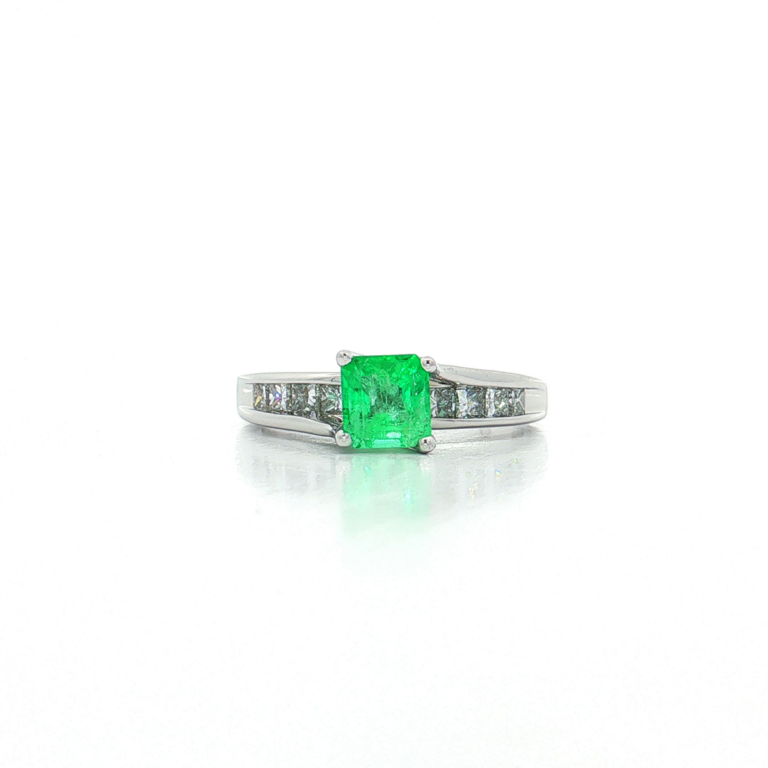
Diamonds are judged mostly by cut and clarity. Colored gemstones such as sapphire, ruby and emerald are judged mostly by color.
Color
A gem’s color has three parts: hue (the color itself, such as blue or red), tone (how light or dark it is) and saturation (how vivid or muted it is). The most valued stones usually show a strong, even color that is neither too light nor too dark.
Clarity
Many colored gems naturally form with inclusions, and some almost always have them. Aquamarine and topaz are often eye-clean. Sapphire and ruby usually show some inclusions. Emerald is almost always included, and those inclusions are often called its jardin, French for “garden”. A colored gem’s clarity is judged against what is normal for that variety, not against diamond standards.
Carat Weight vs. Size
Carat is a measure of weight, not size, and gem materials differ in density. A one-carat ruby or sapphire is denser than diamond, so it looks smaller than a one-carat diamond. A one-carat emerald is lighter, so it looks larger. When comparing stones, look at their measurements in millimeters as well as their weight.
Treatments
Many gemstones are treated to improve their color or clarity. Heating sapphire and ruby is common and permanent. Emeralds are commonly filled with oil or resin to make inclusions less visible. Treatments affect value and care, so ask about them before you buy.
Durability
On the Mohs hardness scale, diamond is a 10, and ruby and sapphire are a 9. Emerald is 7.5 to 8, opal 5.5 to 6.5, and pearl only 2.5 to 4.5. Harder stones stand up better to daily wear in a ring. Softer stones are better suited to earrings and pendants, or to rings worn with care.
Sources: GIA Gem Encyclopedia: Sapphire · Ruby · Emerald · All gemstones.